[11.2.6.] Record and preserve cultural heritage 2024
- date
- 2025.11.09
- name
- globalpnu
- view
- 6
[11.2.6.] Record and preserve cultural heritage
Deliver projects to record and preserve intangible cultural heritage such as local folklore, traditions, language, and knowledge. This can include the heritage of displaced communities
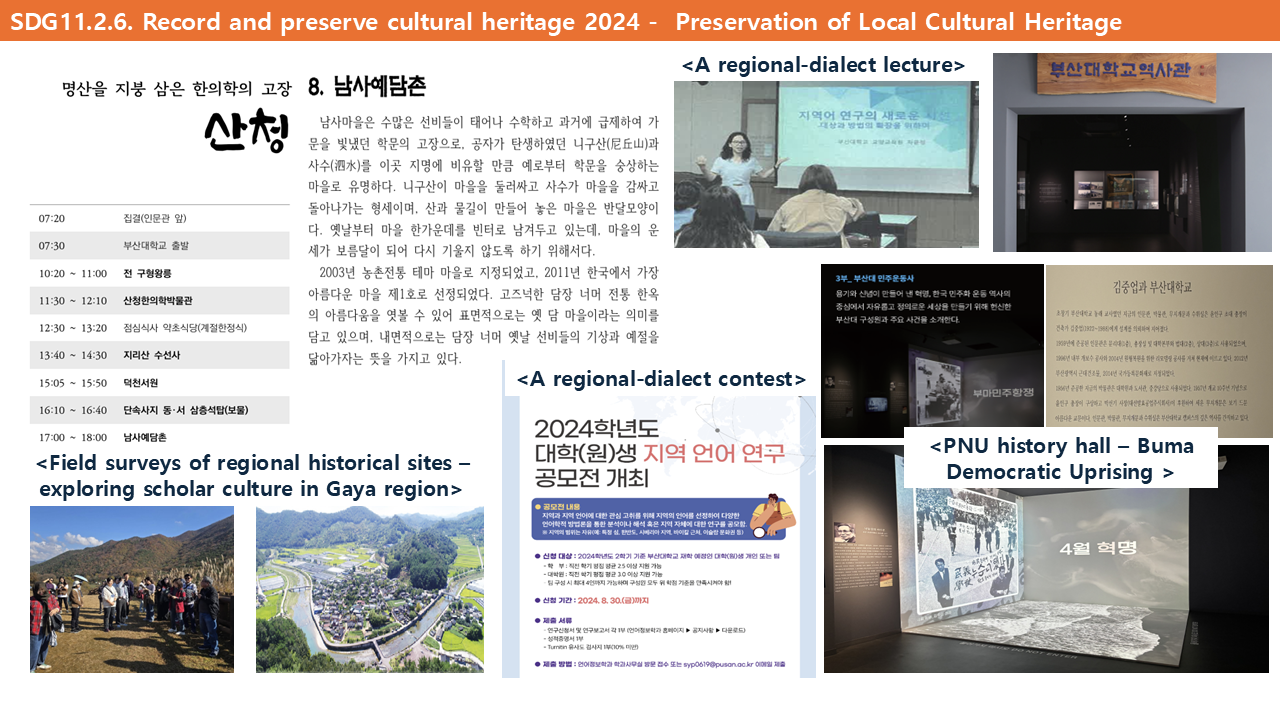
1. Preservation of Local Cultural Heritage
1) The PNU Museum conducts field surveys of regional historical sites to raise campus awareness of cultural heritage preservation. In 2024 it ran a program exploring scholar culture in the Geumgwan Gaya region through a field survey in Sancheong County.
2) In 2024 the Dept. of Linguistics and Information held special lectures and a regional-dialect contest to promote awareness of Korea’s linguistic diversity and preservation.
3) The PNU History Hall displays records of the Buma Democratic Uprising, sharing the Busan region’s identity and history with visitors and campus members.
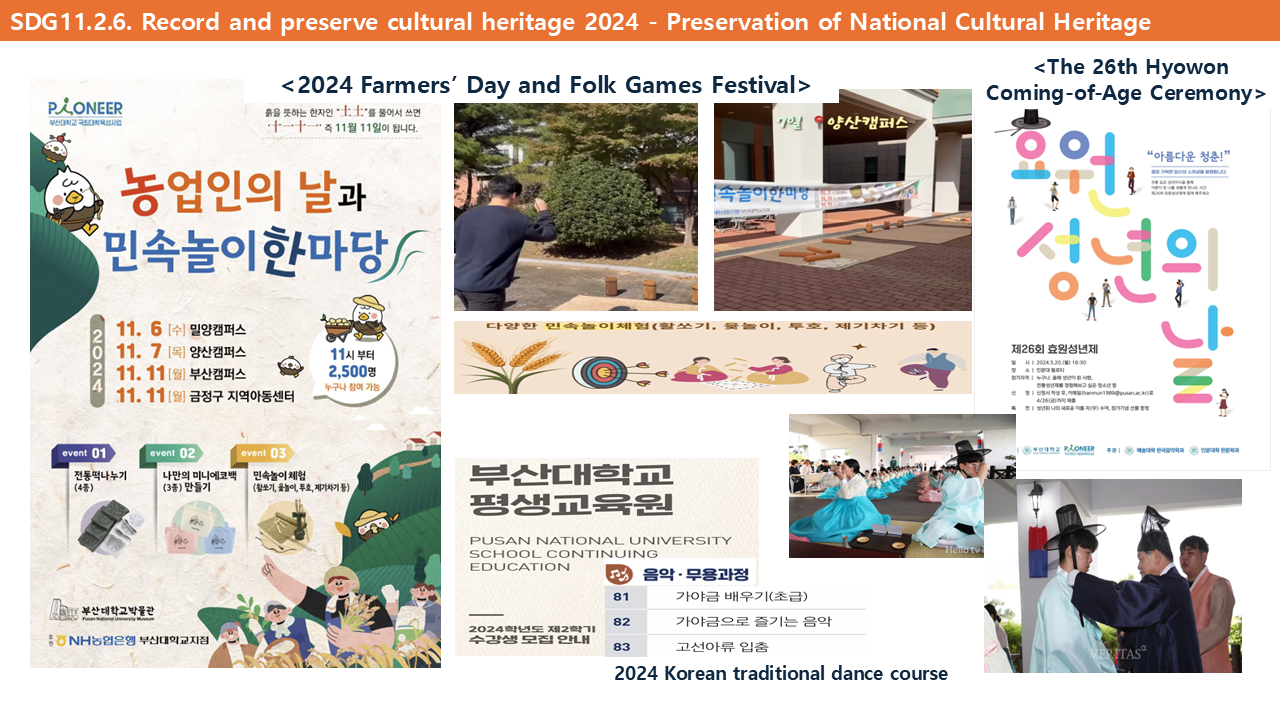
2. Preservation of National Cultural Heritage
1) The PNU Museum hosted the 2024 Farmers’ Day and Folk Games Festival, allowing campus members and local residents to experience national intangible cultural heritage such as the game of Yut, a popular Korean folk game and traditional archery.
2) PNU held the 26th Hyowon Coming-of-Age Ceremony in 2024, offering participants traditional Korean coming-of-age rites and music; the annual event draws many students and local residents.
3) The PNU Lifelong Education Center for Future and Citizen offered a 2024 Korean traditional dance course, supporting local residents’ direct engagement with traditional arts.
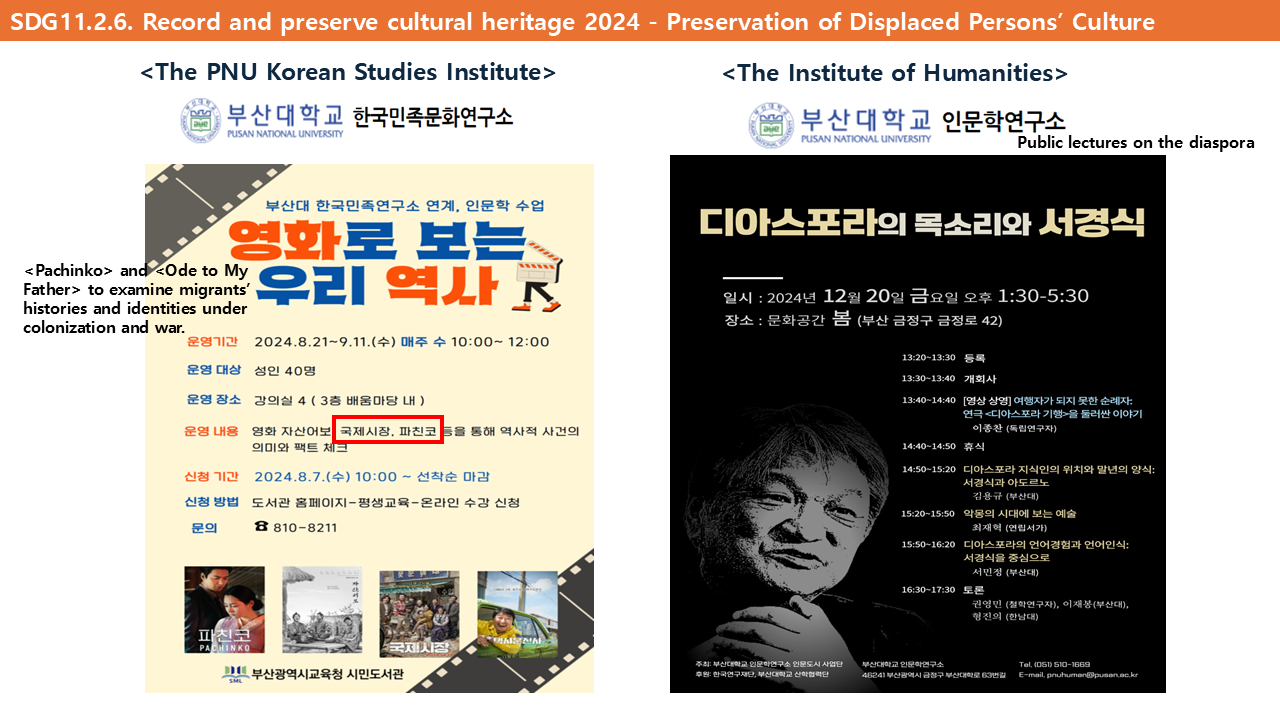
3. Preservation of Displaced Persons’ Culture
1) The PNU Korean Studies Institute conducts locality-focused humanities research and runs programs on migrants’ lives and cultures. In 2024 it hosted public lectures centered on the films, <Pachinko> and <Ode to My Father> to examine migrants’ histories and identities under colonization and war.
2) The Institute of Humanities held public lectures on the diaspora; Professor Min jeong Seo (Dept. of Linguistics and Information) delivered a special lecture on the linguistic experiences and language awareness of diaspora communities.
- 첨부파일
- 첨부파일이(가) 없습니다.